
Marketplace identity
AasPas positioned as a modern hyperlocal service brand with worker discovery, booking intent, and service-at-home messaging.
Flagship case study
Hyperlocal service marketplace and realtime operations platform
AasPas is a full-stack marketplace built around a complete service lifecycle: customer discovery, worker matching, booking acceptance, live arrival tracking, job execution, payment completion, earnings distribution, support, post-service trust, and multilingual AI-guided booking help. It combines React Native mobile clients, StyleSheet-driven native screen architecture, a Node.js backend, realtime Socket.IO flows, Firebase Cloud Messaging, Google Maps, Razorpay, Agora calling, Redis-backed active state, MongoDB recovery, AI-assisted conversational flows, and native Android modules for lock-screen, background, and notification-driven behavior.
Visual showcase
These are real production screenshots from the customer and worker apps. I placed them here so the case study shows actual product depth across discovery, package selection, AI assistance, tracking, payments, wallet visibility, and earnings correctness instead of only marketing visuals.
AasPas positioned as a modern hyperlocal service brand with worker discovery, booking intent, and service-at-home messaging.
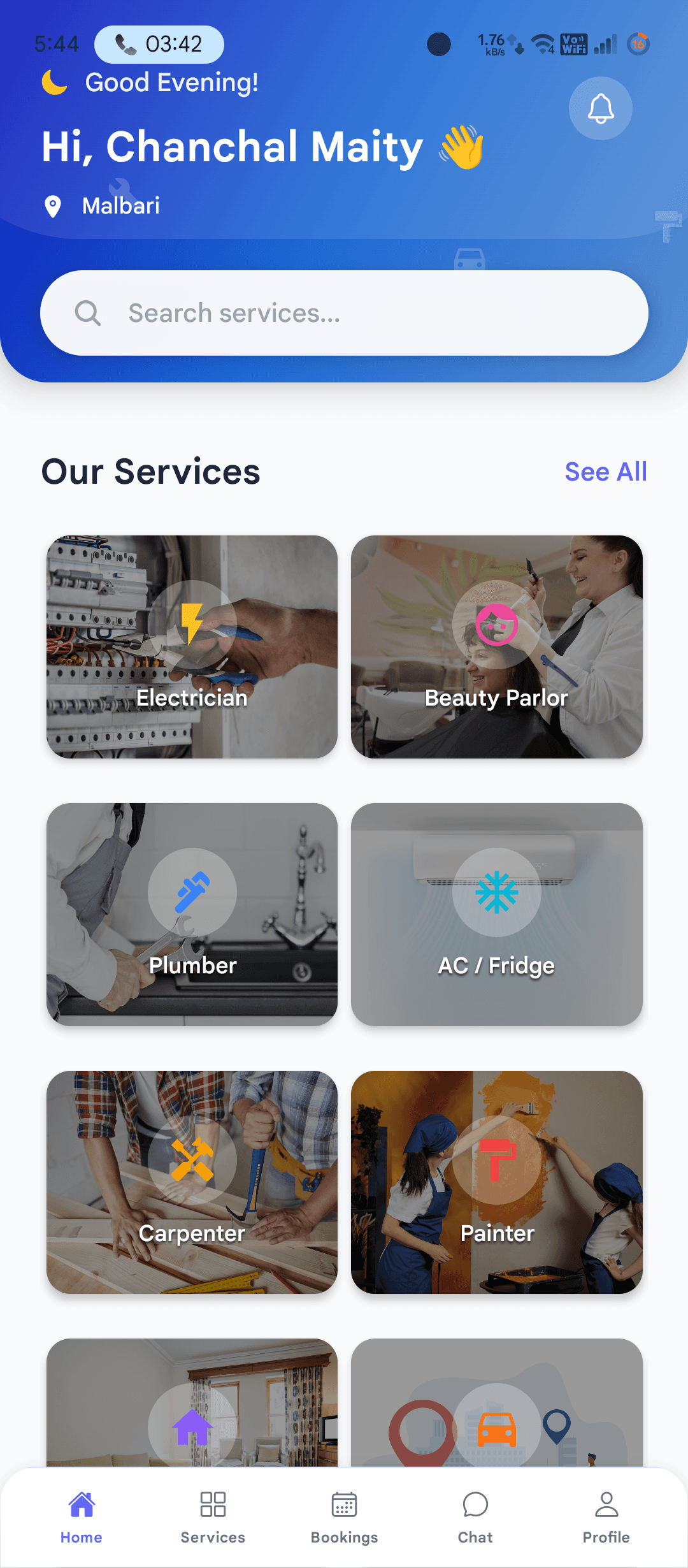
The home experience starts with search, service categories, and a strong booking-first interface instead of a generic landing screen.
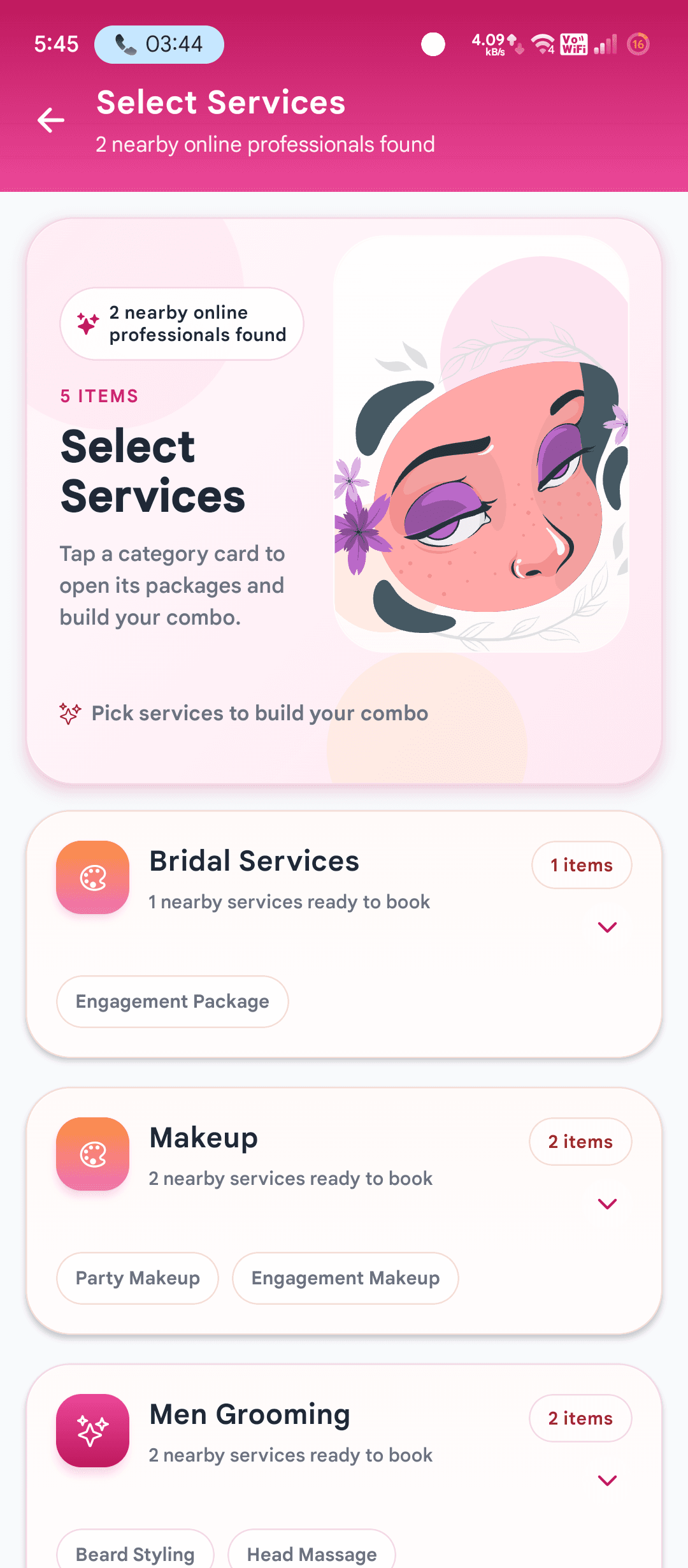
Category-specific package selection lets the marketplace handle richer service menus such as beauty workflows with multiple bookable items.
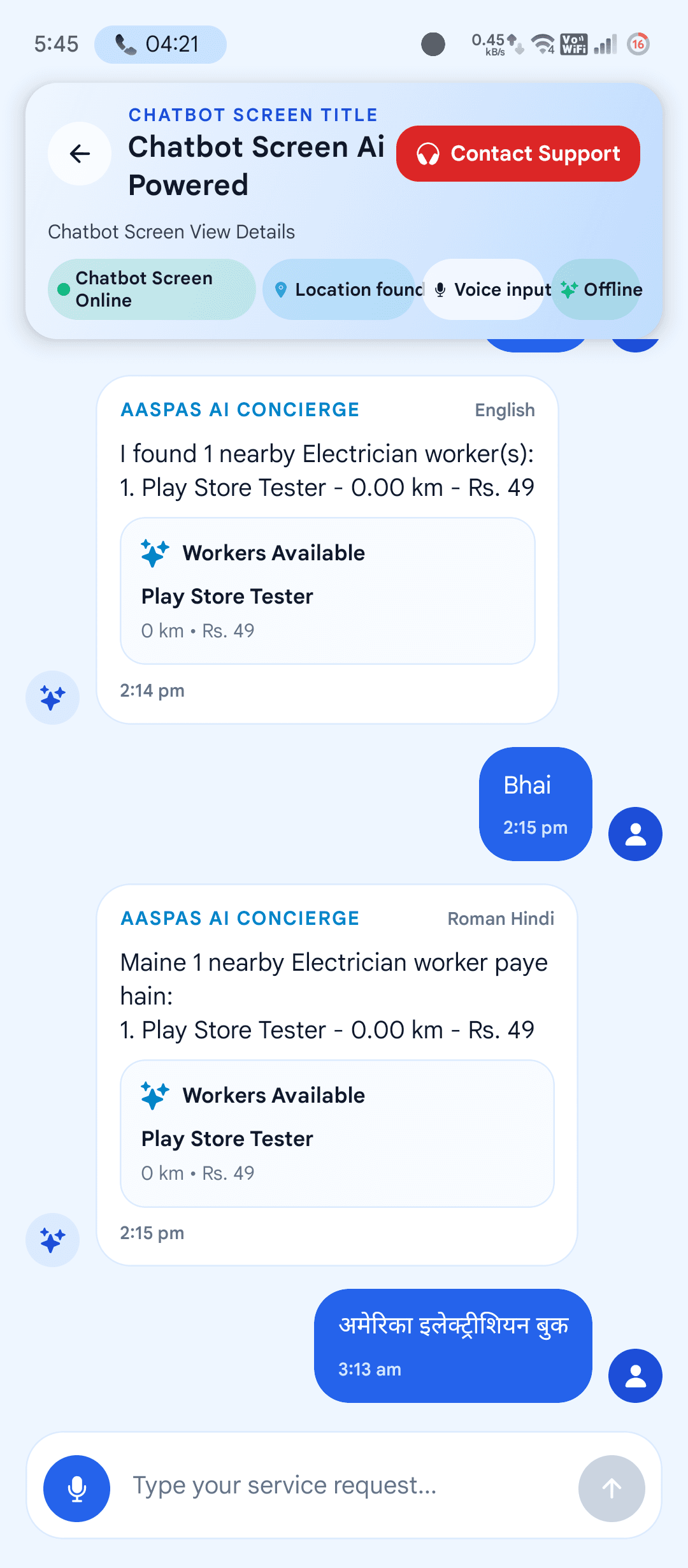
The AI concierge is not a concept slide. It is integrated into the app with multilingual responses and booking-oriented worker suggestions.
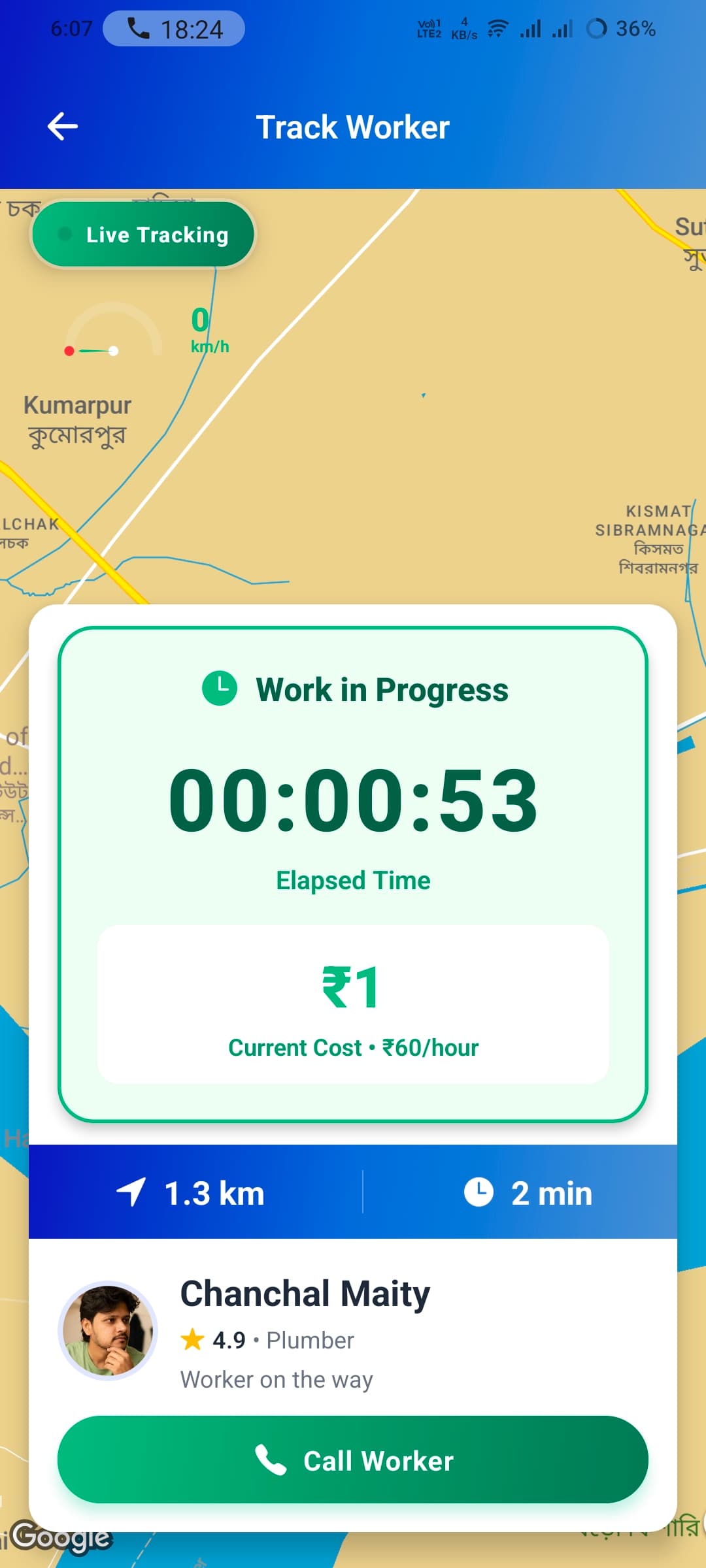
The live tracking surface combines worker map state, elapsed job timer, current cost, ETA, and direct communication controls.
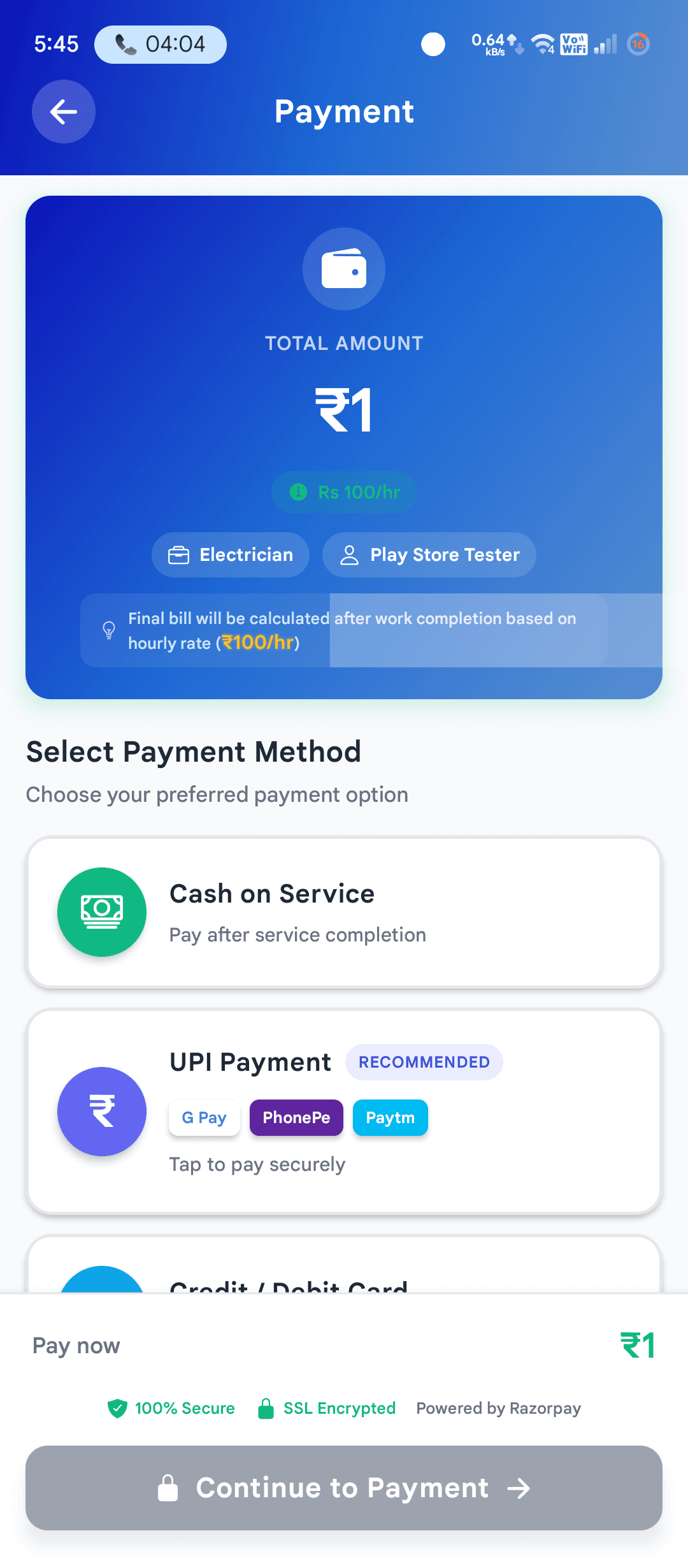
Advance booking fee, secure payment entry, and backend-owned money correctness are exposed through a polished customer payment flow.
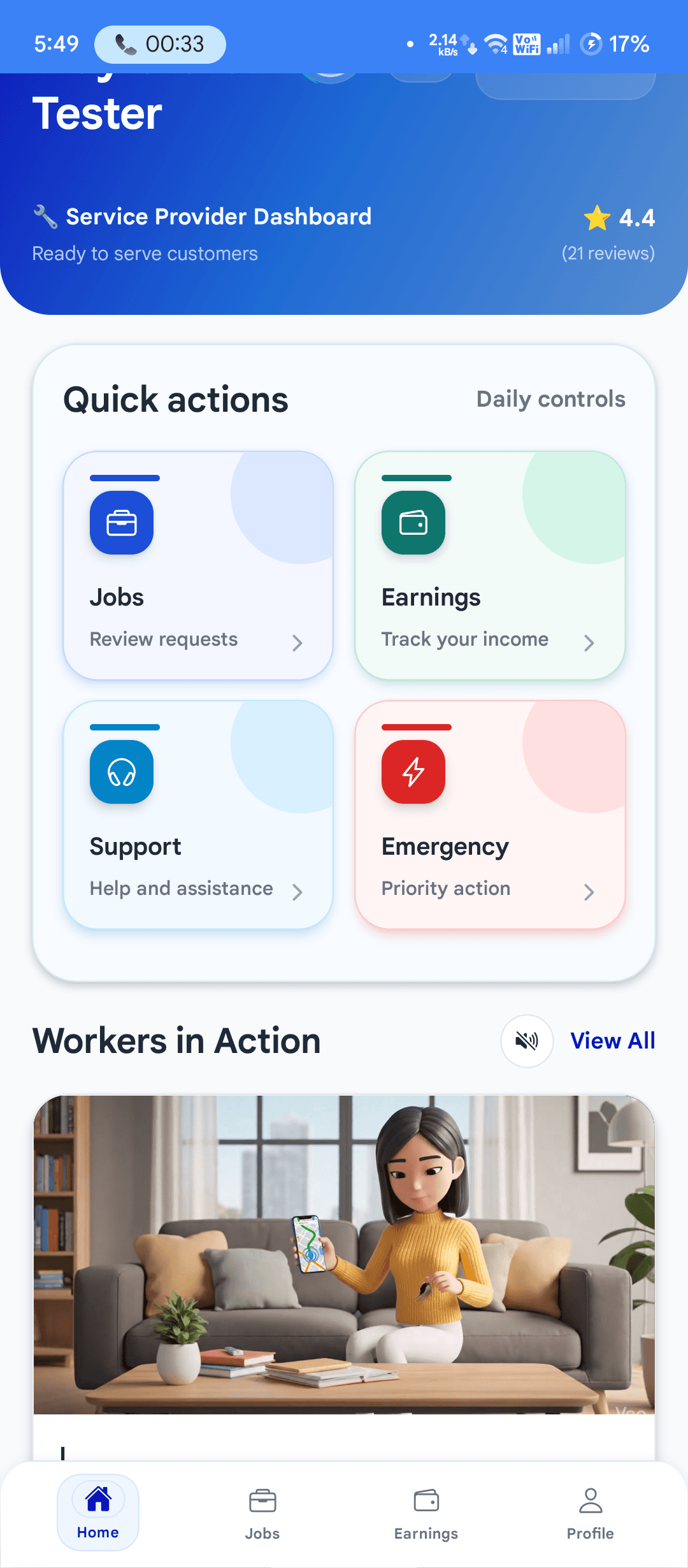
The worker app includes operational quick actions for jobs, earnings, support, and emergency workflows in a field-operations oriented layout.
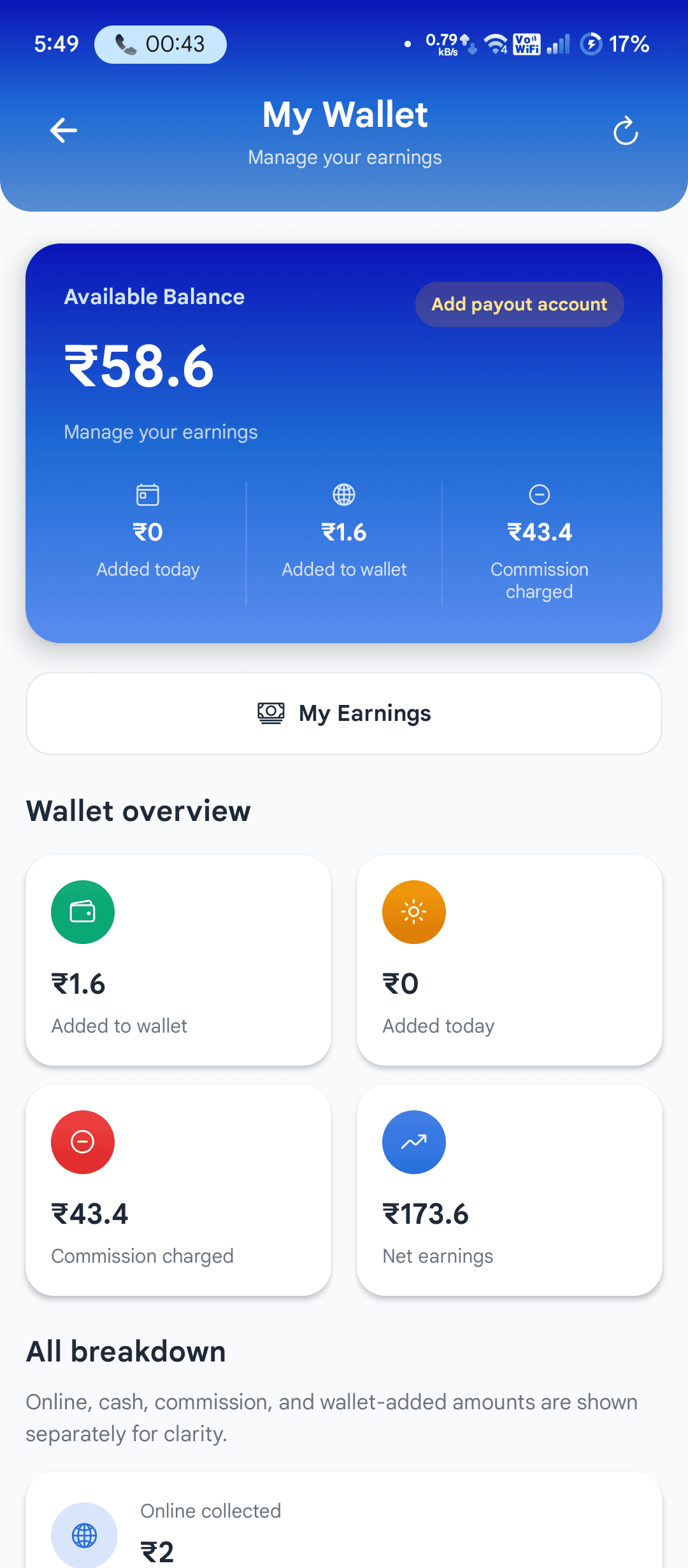
The worker-facing wallet surface shows balance, payout setup, commission, and earnings composition to support settlement clarity.
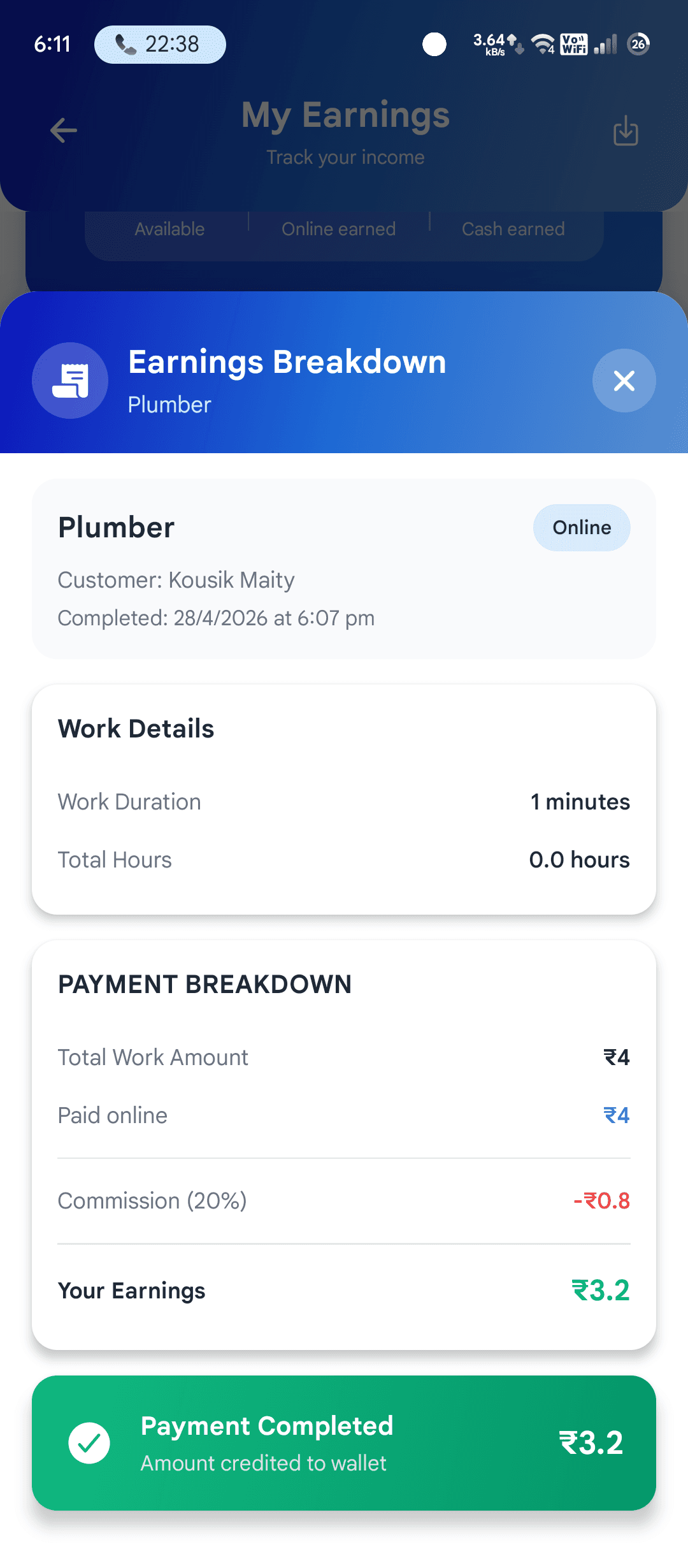
Each completed job can be audited through a detailed earnings sheet showing work amount, online payment, commission, and final credited value.
System map
AasPas is wide in scope because it connects discovery, booking, realtime state, worker motion, money movement, operational support, and post-service trust inside one mobile product. The engineering challenge was not one feature. It was making all of these subsystems behave consistently together.
Supports service discovery, worker selection, booking creation, worker acceptance, cancellation, work start, job completion, payment pending, payment success, review flow, and booking history restoration.
A multilingual conversational layer helps users ask for services in natural language, guides them to the right category or worker flow, and can support assisted booking behavior instead of relying on rigid menu-only navigation.
Workers configure their operating area and availability so discovery is location-aware. Once a booking is active, customer tracking uses latest worker location, route cache, ETA, distance updates, and map-based arrival visibility.
Voice calls use Agora with custom Android incoming-call and ongoing-call experiences, notification actions, lock-screen entry, speaker and earpiece routing, and seamless return-to-call behavior.
Handles minimum booking fee, online payment, cash collection, final job amount, worker earnings, commission logic, remaining balance, wallet visibility, and settlement-ready records without exposing private business internals.
Workers manage incoming bookings, active jobs, location sharing, job timer, collect payment flow, earnings dashboard, wallet view, document setup, service-area setup, and availability control.
Backend and admin tools cover notifications, payout and wallet visibility, service monitoring, support tickets, tutorial content, app version control, and operational status tracking.
Role design
This product is deeper than a single app because it has separate responsibilities for customers, workers, and operations. There is also a shared realtime platform layer keeping those surfaces synchronized.
The customer surface handles the complete service journey from search to review, with strong emphasis on trust, realtime visibility, and payment clarity.
The worker experience is not a passive dashboard. It is a field-operations app that has to react to bookings, movement, job timing, payment collection, and availability state in realtime.
AasPas also includes the operational layer needed to run the business, monitor workflows, and support users after the initial booking happens.
These are the cross-cutting systems that keep customer, worker, and admin surfaces synchronized, recoverable, and production-friendly under real mobile conditions.
Technical architecture
The stack spans mobile frontend, backend APIs, realtime event routing, cache-backed recovery, mapping, external payment and communication services, and native Android integration. Each layer has a clear job rather than acting as accidental complexity.
Role-based customer and worker experiences built in React Native with StyleSheet-driven native screen architecture, multilingual UX, state-driven flows, and offline-aware behavior.
A Node.js and Express backend that owns canonical booking, payment, worker, wallet, and history state with protected routes and validation.
The product also includes conversational booking-help patterns that connect natural-language service intent to guided marketplace actions without exposing internal business logic.
Socket-driven state propagation keeps customer, worker, and admin experiences synchronized through booking rooms and targeted event delivery.
Fast active-booking reads are separated from durable recovery so the product remains responsive while still recovering from app reinstall or reconnect scenarios.
Platform-specific Android work was added where plain React Native was not enough for booking urgency, call UX, and background behavior.
The product integrates payment, maps, calling, and notification infrastructure while keeping backend-owned correctness for sensitive business state.
Money systems
This product needed more than a simple payment button. It required marketplace-style money flow: advance fee, remaining balance, worker collection, earnings, commission, and backend-owned correctness for what was already paid versus still pending.
Minimum booking fee flow for advance payment and booking confirmation
Online payment and cash collection support across customer and worker journeys
Backend-owned canonical calculation for total paid, already paid, remaining due, hourly charges, and final amount
Worker-side collect-payment experience tied to final booking state and earning updates
Commission, worker earning breakdown, wallet visibility, and settlement-oriented records
Payment verification and reconciliation patterns so UI display is not treated as money truth
Location intelligence
Live tracking had to feel stable and believable in real use. That meant worker discovery by radius, latest-location storage, polyline reuse, controlled rerouting, and customer-facing map state that survives app restarts or reconnect events.
Worker discovery filtered by service area, availability, and operating radius
Realtime location streaming for active bookings instead of static polling-only behavior
Latest worker location stored as hot state for quick reopen and tracking restore
Polyline and route cache so the app can reopen tracking without blindly calling map APIs again
Controlled rerouting logic to avoid overusing Google Directions when the worker goes off-route
Smooth visual tracking combined with ETA and remaining-distance awareness for the customer
Native communication
Calling was implemented as a native-feeling system instead of a lightweight modal. The experience had to behave correctly from notifications, lock screen, background state, and in-progress multitasking while keeping caller and receiver flows synchronized.
Agora voice call integration for direct customer-worker calling
Incoming call full-screen experience and notification actions on Android
Tap-to-return ongoing call notification for both continuity and multitasking
Speakerphone-default behavior with earpiece switching for more phone-like calling UX
FCM-backed wake-up and call signaling fallback when the app is not active
Socket-driven call accept, reject, end, and synchronization events across both users
Operations layer
The product also needed the business-side layer that helps the marketplace run after launch: notifications, service monitoring, support workflows, visibility into money movement, and rollout discipline for app updates.
Notification operations and message routing support
Wallet, payout, and payment visibility for business operations
Support ticket, issue-management, and review-awareness flows
Service monitoring, worker oversight, and availability-related support
Video/tutorial and informational content management
App version control and rollout discipline for production updates
Flagship capabilities
Native Android booking and calling flows instead of simple JS modals
Smooth worker tracking with route awareness and latest-location recovery
Service radius and availability controls so workers appear only where they operate
Booking lifecycle covering acceptance to payment confirmation and review
Wallet, earning, commission, and settlement support for worker-side economics
Multilingual AI booking assistant that can guide or trigger service booking workflows
React Native StyleSheet-based screen system for customer and worker experiences
Customer, worker, and admin experiences built within one connected platform
App-version and operational tooling for controlled rollout and support
High-level security and correctness measures without exposing sensitive implementation secrets
Ownership and reliability
This is the part that matters in interviews: the product was not only designed. It was also implemented, debugged, and production-shaped across all of these layers by a single developer with direct responsibility for both features and correctness.
This page intentionally explains product scale without exposing sensitive secrets, internal pricing rules, private keys, raw customer data, or exploitable operational details. The goal is to show judgment, depth, and reliability in a safe public format.
Technology index