Shopping-state depth
Wishlists, carts, cookie-authenticated sessions, and MongoDB user state make the product stronger than a purely visual store mockup.
Retail commerce case study
Full-stack retail commerce platform with JWT sessions, cart and wishlist persistence, merchandising bands, and variant-aware browsing
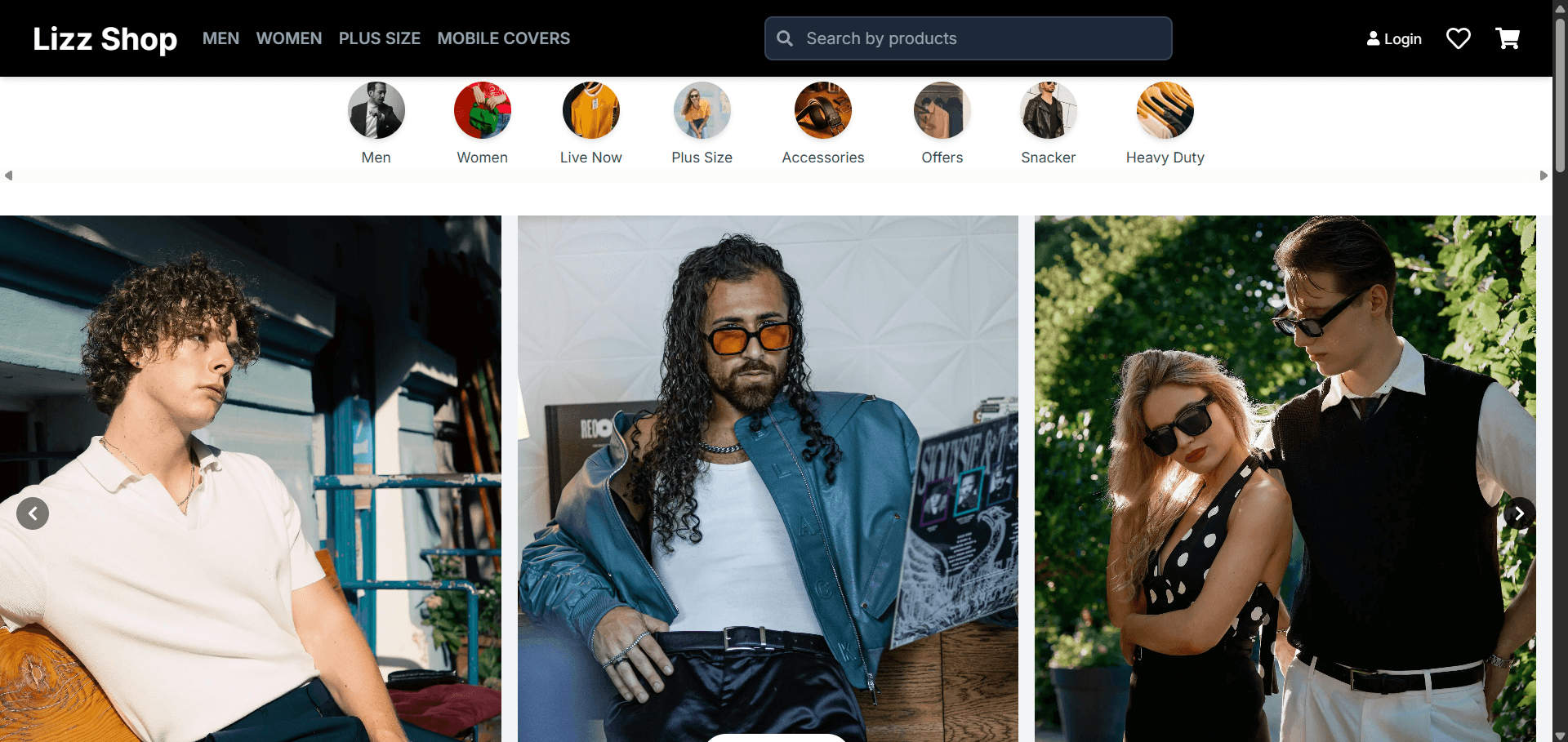
Lizz-Shop is a full-stack e-commerce platform built with a dedicated web frontend and backend service architecture. The storefront covers product discovery, category browsing, search, detailed product pages, size and color variants, wishlists, carts, and user account behavior. The backend uses Node.js, Express, MongoDB, Mongoose, JWT-based auth, and cookies to maintain user-specific cart and wishlist state. On top of core shopping behavior, the project includes merchandising sections such as new arrivals, trending products, and BOGO-oriented presentation, which makes it feel closer to a real retail storefront than a catalog demo.
System proof
Wishlists, carts, cookie-authenticated sessions, and MongoDB user state make the product stronger than a purely visual store mockup.
Product detail pages handle size and color selections so the purchase flow feels closer to real retail behavior.
New arrivals, trending sections, and BOGO-oriented APIs show that the project includes merchandising thinking, not only CRUD data rendering.
A dedicated backend service with JWT and cookies proves this is structured more like an actual application stack than a frontend-only prototype.
Customers can browse categories, search for products, inspect collections, and move through merchandising-led storefront sections instead of only a single static catalog page.
Product pages support variant-style choices such as size and color, helping the store behave more like an actual fashion or retail shopping experience.
JWT-backed sessions and cookies connect the frontend to user-specific cart and wishlist data, which gives continuity across visits and refreshes.
User intent is stored in backend models so saved products and cart contents are not limited to local browser state alone.
Dedicated flows for trending items, new arrivals, and BOGO-style content help the storefront feel curated and commercially planned.
Responsive catalog layout, search, product detail presentation, and multi-step browsing flow make the site feel usable as a real customer-facing storefront.
The customer-facing experience is built with Next.js and TypeScript, covering category routes, product pages, search, auth screens, and shopping-state views.
A separate Node.js and Express layer handles auth, user data, cart updates, wishlist operations, and health checks.
MongoDB and Mongoose store products, user accounts, carts, and wishlists so shopping state has a real database-backed source of truth.
The app includes merchandising sections, variant selections, and browsing structure that make it feel more like a living store than a plain data grid.
Ownership
Technology index