Telephony to app workflow
The interesting part is the end-to-end workflow: ring timeout, Twilio forwarding, greeting playback, recording capture, database save, and app inbox visibility.
Telephony workflow case study
Android-first voicemail product with Twilio call flow, Mongo storage, greeting setup, and inbox playback
Visual Voicemail System is a telephony-oriented product concept designed to bring an iOS-style voicemail experience to Android users. The backend receives forwarded unanswered calls through Twilio, plays a greeting, records the caller message, stores voicemail metadata in MongoDB, and exposes the inbox through a mobile app. The app presents voicemail messages in a list, shows unread state, allows playback, and supports user-level greeting setup. The project combines backend webhooks, file upload handling, Mongo data models, and mobile audio playback into one connected product idea.
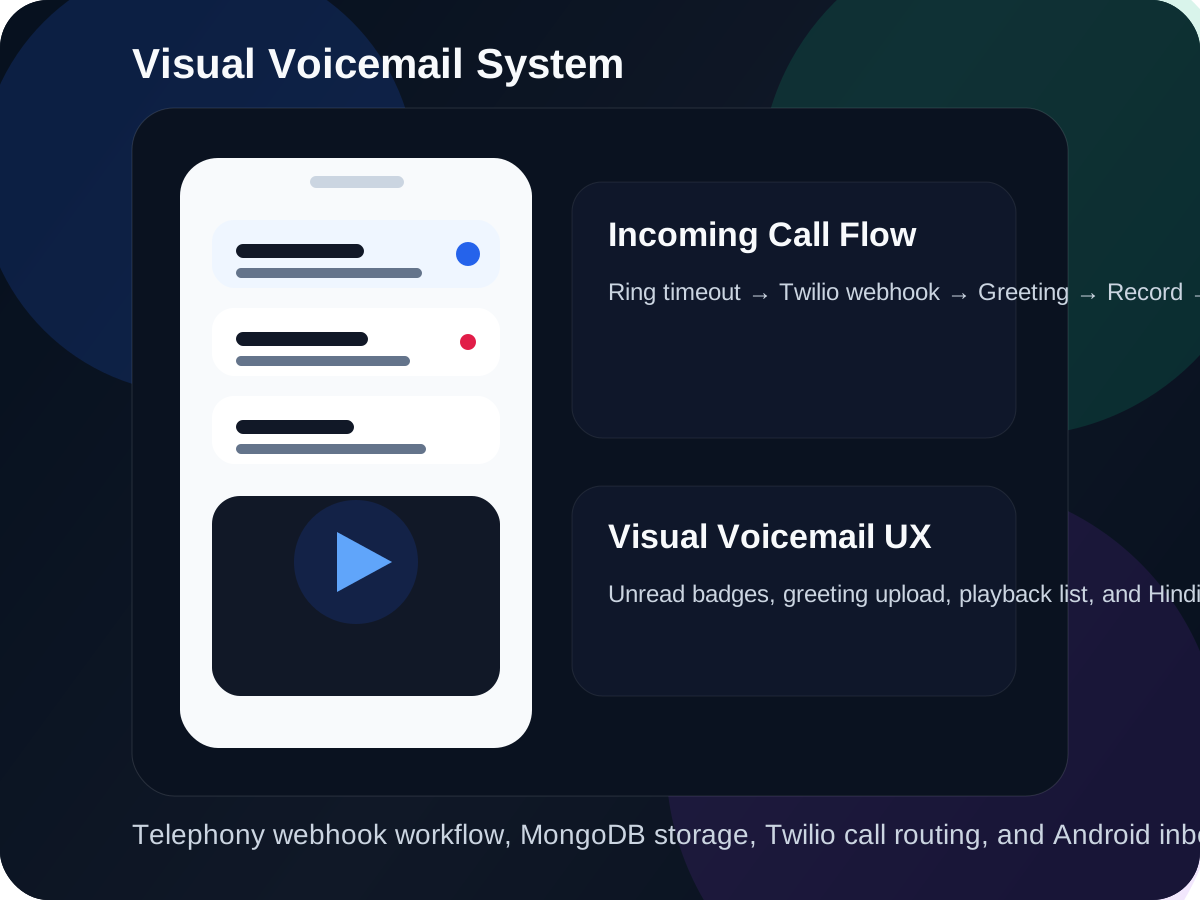
System proof
The interesting part is the end-to-end workflow: ring timeout, Twilio forwarding, greeting playback, recording capture, database save, and app inbox visibility.
Unread badges, timestamps, durations, caller numbers, and tap-to-play behavior make voicemail feel like a modern list-based product instead of a hidden telecom feature.
Users can upload or associate greeting audio, which is an important part of making the experience feel personal and productized.
This project mixes backend webhook handling, file storage, Mongo schemas, and mobile audio playback rather than living in a single frontend layer.
The project models the real-world voicemail lifecycle: a call rings, forwards on timeout, greeting audio is played, the caller leaves a message, and that recording becomes part of the user inbox.
Messages are shown as a readable list with caller identity, duration, timestamps, and unread state instead of forcing users into voice-only carrier navigation.
Users register a number, maintain their voicemail profile, and can upload or point to a custom greeting that becomes part of the telephony experience.
React Native playback support makes voicemail retrieval feel like a media app action rather than a hidden backend artifact.
MongoDB stores voicemail records, user profile fields, greeting references, unread state, and timestamps so the app has a real source of truth.
This is useful portfolio work because it combines mobile UX with backend event workflows and real-world phone behavior rather than ordinary CRUD-only screens.
Node.js and Express receive incoming-call and recording-complete events, generate TwiML responses, and persist voicemail records.
MongoDB stores voicemail metadata and user voicemail settings while uploaded greeting media is handled through file storage.
The mobile surface lists voicemail records, tracks unread state, and plays messages through a native-friendly audio playback layer.
The system connects real call forwarding behavior to a cleaner voicemail experience designed for Android users.
Ownership
Technology index